more like this

* This post has been modified
: 20 years ago


Quote:
Originally posted by Bank
the problem with possesion (according to the Church) is that individuals no longer have the right to choose... they loose their will. God's gift of choice is gone.
Legal rights, the Church contends, always go to God... thus, the inhabitant of the body.
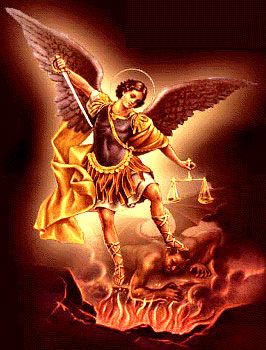
There is no negotiation. Priests demand for the 'spirit' to leave. The spirit has no choice... as it's Jesus who speaks through the priests (in theory). Often, St. Michael is witnessed by those possesed before the spirit leaves, demanding for the cursed being to leave the body.
It's literal war... nothing to do with ownership in the mind of the priest/God. Even if the person doesn't wish for the spirit to leave (I've never heard of it), the priests would still act... as it is one of the few realms where they are true soldiers.
Quote:
Originally posted by wineanddine
So true. The misconception between religions and interpretation of them is often found in dogma. People often try to defend what they believe according to the sect of religion that they are familiar or committed to.
Truth however, does not need defending. Truth is truth wether it comes from an heathen or believer. There is truth without religion and none truth with it. From a Christian standpoint "The Truth shall set you free" is the basis on which all believer should live. Note I said SHOULD!
Where truth gets clouded is when individuals try to defend "their truth" by religion. Their actual knowledge of truth has come from the religion or sect of belief. Suprisingly, I have found many people defending their sect rather than defending their truth (IE the role of the priest). The role of the priest as defined by Christ (who is the Christians high priest) was to serve humanity as He served them.
I dont know if you are a reader or not, but a book called "Healing The Family Tree" was written by a guy called Dr Kenneth Mcall -Sheldon Press ISBN 0 85969 532 8 (1987). In which he chronicled and evidenced deliverences and healings appropriated when individuals took of communion (the catholics call this eucharist). Not by words or conversation, but by taking communion (which is the centrality of the Christian Faith as the blood of Christ being the power by which all men are saved).
This is the individuals choice to live inside the power or outside of it. One doesnt have to have all the facts to believe, or the faculties to understand but obedience to act or choose.
Good on ya Bank
Quote:
Originally posted by EricTheViking
well said bank....but i thinnk that truth is pretty clear in many things, i think we can be 100% sure about certain issues: if you jump off a mountain, you will fall. 1 out of 1 dies (the only TRUE statistic im aware of) etc etc....so, i think believing in a truth isnt insanity or a leap of faith, but an observable event that can be repeated.
in the case of faith in God, i dont think ANY believer would claim that they havent taken a leap of faith, and i think most are proud they have.
Quote:
Originally posted by EricTheViking
hmmm....well, i meant someone who had a FAITH as opposed to religion (i dont want to argue semantics here.....but there is a difference, to me at least) religion to me is a big machine that is simply creating more people to be religious....and i dont want to discuss it too in depth, because that will break the rules here of no religious discussions. but i think RELIGION is simply an entity, something you do because it feels right, not because it is TRUTH....i think a person who is FAITHFUL believes that they have found a universal truth, and i think someone like that tends to be a bit more honest about the fact that they truly believe something
so, to me, someone who is "religious" is the person who just says the bible is fact without any thought or reasoning. (which doesnt make sense anyway as the bible clearly states "question everything" the bible itself is part of everything)....and someone who is faithful, realizes that they believe in a greater truth, and that they must have taken the leap of faith to dive in
so, to me, the truly faithful, the believer, admits that he doesnt know, but that he is willing to take that chance becuase he thinks he has found an ultimate truth that he cant define in any other way.
is that more clear, or less?

This website contains age-restricted materials including nudity and explicit depictions of sexual activity. By entering, you affirm that you are at least 18 years of age or the age of majority in the jurisdiction you are accessing the website from and you consent to viewing sexually explicit content.